01 · Define the cotton requirement
Start with fiber composition and the required organic share, then add yarn count, weave or knit construction, GSM, usable width, finish and color. A supplier may offer stock fabric with a faster sample path, or custom development that follows a more exact brief. Ask what changes in MOQ, sample cost and approval work before selecting either route. List any allowable blend variation explicitly.
02 · Connect the evidence
Request the supplier identity, quoted article reference and any requested certification record with issuer, scope, site and validity. A company brochure can guide discovery but does not prove a particular order falls within a certificate scope. Ask the proposed supplier to explain any transaction-level records needed for the buyer's intended claim. Keep open questions visible until qualified parties confirm applicability.
03 · Normalize the commercial reply
Collect quantity per color and total, units, usable width, roll length, sampling fees, test charges, packaging and delivery terms. Compare the same US destination and freight basis. A lower price per yard can become less attractive if the usable width changes cutting yield. Budgets may be per meter or whole order; identify currency and choose high-end, mid-range, economical or undecided as a preference rather than a supplier rating.
04 · Agree approval gates
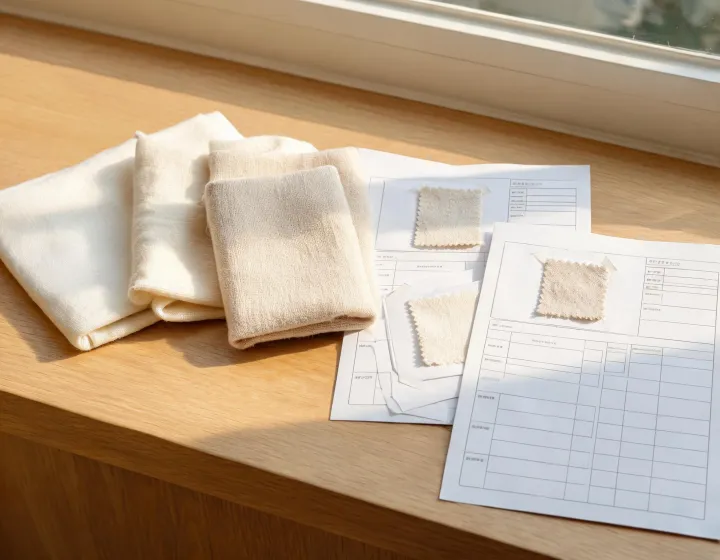
Coordinate a swatch, lab dip or strike-off as appropriate, followed by the agreed pre-production and bulk review. Record specimen identity, conditioning, test method and edition, acceptance threshold and result source for shrinkage or colorfastness requirements. A lab report for a different finish or dye lot is a question to resolve. Sample fees, lead time, inspection access and final supplier terms require confirmation.