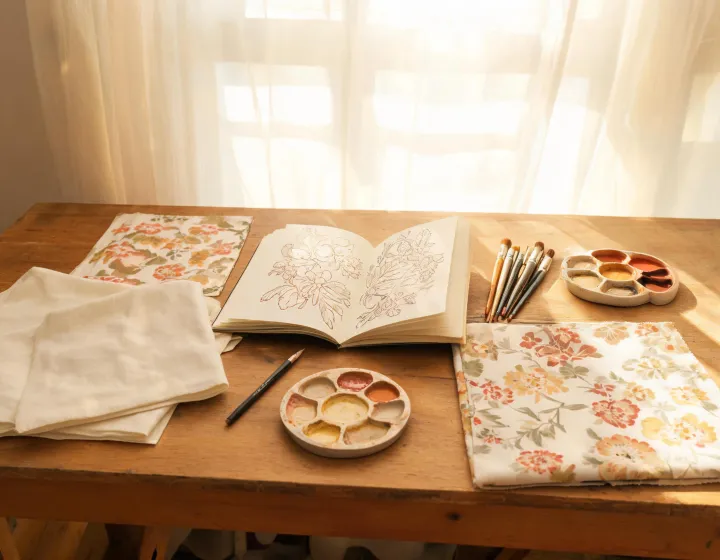
Pick the base-cloth route
Record fiber composition, yarn count, weave or knit construction, weight in g/m² and usable width in cm or inches. Stock base cloth may reduce development questions when it meets the brief. A custom base may offer closer control of construction and finish, with minimum order and sample implications to confirm. Neither route is automatically the better purchase; compare acceptable variation, approval stages and delivered scope.
Prepare the artwork conversation
Describe motif scale, repeat size, color references, placement direction and finished-product appearance. Ask the proposed printer to confirm the artwork format and print route they can evaluate. Do not assume that an image on screen will match a physical strike-off. The approval record should identify the base fabric, finish, artwork version and reviewed sample so changes do not disappear between design and production discussions.
Choose what must be tested
State intended care and use conditions before setting shrinkage, colorfastness, pilling or strength criteria. Request a method name and edition, specimen preparation, conditioning, acceptance threshold and laboratory result tied to the exact article. ASTM and AATCC public listings help identify distinct test questions; they do not supply a passing result. An approved strike-off addresses appearance, while bulk dye-lot variation and finishing behavior need their own agreed checks.
Build a comparable request
List meters or yards per color, total quantity, target roll length, US destination, sample need and desired bulk window. Add optional budget, currency and whether it covers a unit or complete order. High-end, mid-range, economical or undecided describes your preference, not a verified factory grade. Compare print setup, sample charges, wastage assumptions, testing, packaging, freight and trade terms alongside unit cost; mark every deviation before treating a proposal as equivalent.